
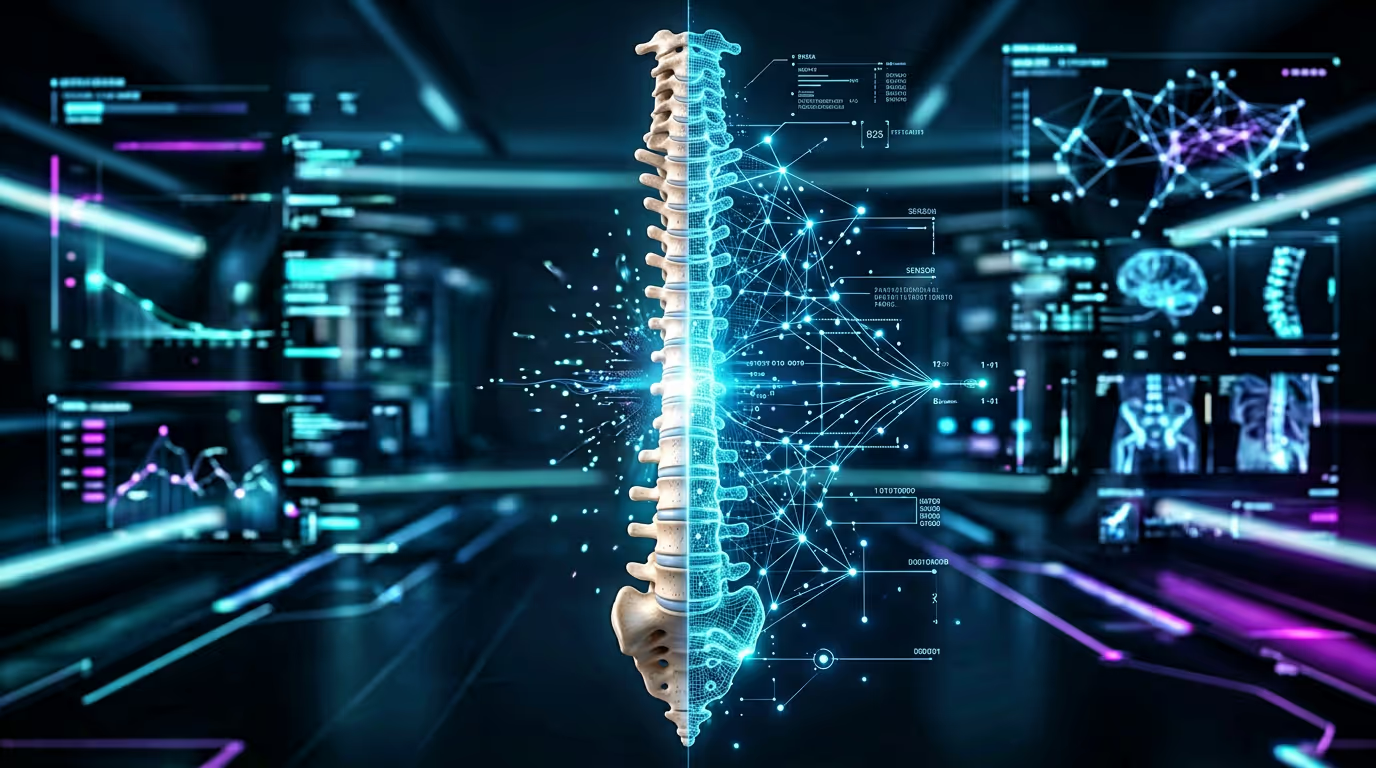
Demystifying the Digital Twin: It’s Already All Around You and How It Will Impact Healthcare
The Robot Vacuum Revolution You Didn't See Coming
Think about your robot vacuum for a moment. That little disc bumping around your living room seems simple enough—it cleans your floors while you're at work. But the technology making it possible is about to revolutionize how surgeons plan spinal operations.
Welcome to the world of digital twins. Once you understand them, you'll start seeing them everywhere.
What Exactly Is a Digital Twin?
A digital twin isn't just a fancy 3D model. It's a living, learning digital replica of something in the real world that continuously updates itself with new data and predicts what happens next.
Here's the distinction: A photograph of your house is not a digital twin. A blueprint isnot a digital twin. But a continuously updated model that knows where every piece of furniture is, learns your daily patterns, predicts where you'll walk next, and adapts when you rearrange your living room? That's a digital twin.
Let me show you exactly how this works.
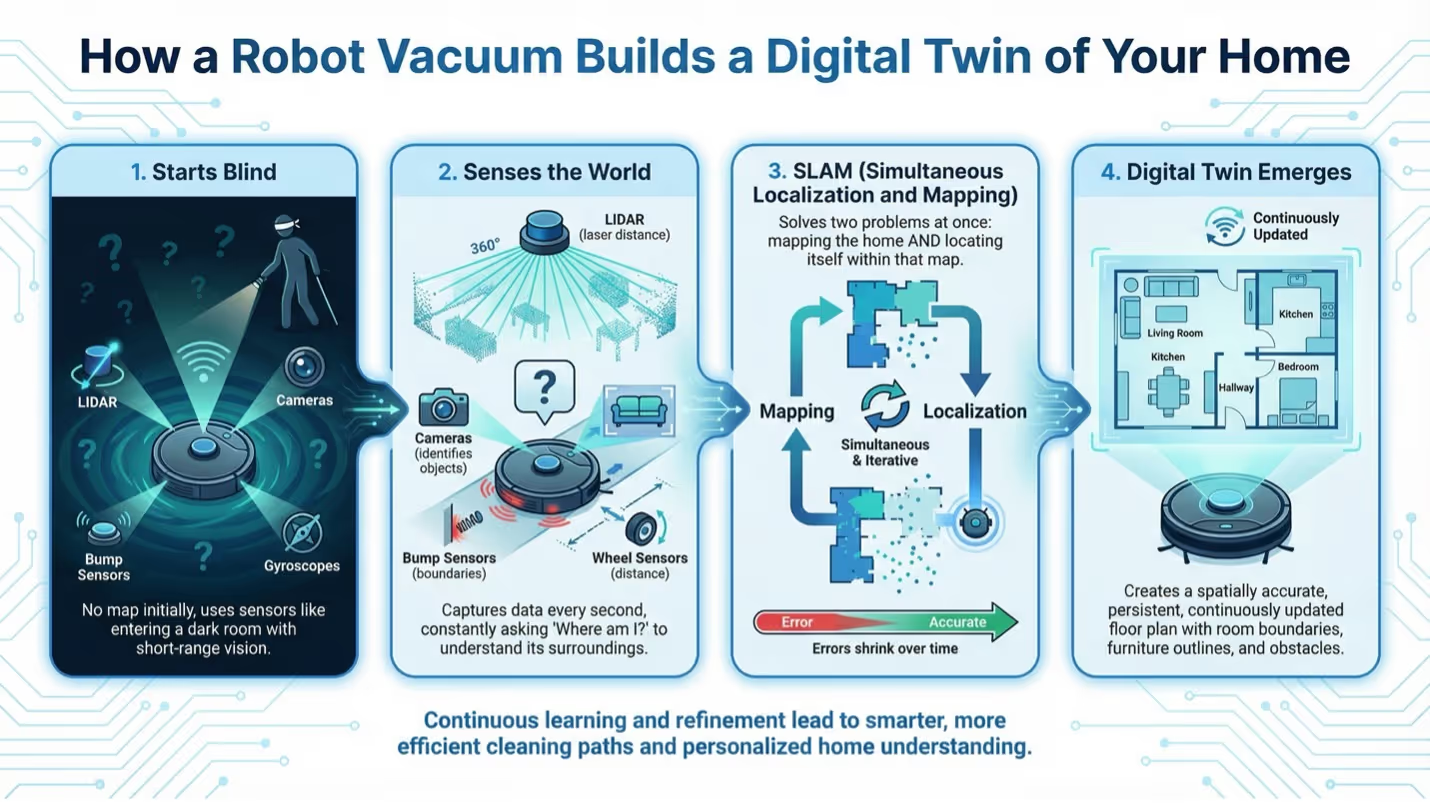
Step 1: Start Blind
The firsttime you run your robot vacuum, it knows nothing about your home. It hassensors—LIDAR lasers, cameras, bump sensors, gyroscopes—but no map. Just raw sensory data streaming in.
Step 2: Sense the World
As your vacuum rolls across your floor, it asks hundreds of questions every second:"Where am I? What's around me? How far have I traveled?" It captures data about your home's layout, but this raw information is just noise until the vacuum makes sense of it.
Step 3: Simultaneous Localization and Mapping (SLAM)
Here's wherethe magic happens. Your vacuum solves two difficult problems at once: building a map of your home while figuring out where it is on that map. This breakthrough—called SLAM—is what makes digital twins possible.
The vacuum thinks: "I've seen this wall before... which means I'm here... which means that doorway leads to the bedroom." Over several cleaning cycles, errors shrink and confidence grows.
Step 4: The Digital Twin Emerges
After a few runs, your vacuum has created a scaled floor plan with room boundaries, doorways, furniture outlines, and obstacle zones. This map is spatially accurate, permanently saved, and continuously updated. This is your home'sdigital twin.
What makes it different from a regular map? It's personalized. Two identical houses will have different digital twins because people live differently. The twin captures your unique patterns.
Now imagine the robot vacuum could also see hidden structural realities—not just where yourcouch sits, but if the floorboards beneath it are weakening, if there's water damage behind the walls, or if the foundation is settling unevenly. A digital twin doesn't just map what's visible—it reveals hidden structural changes.
Step 5: The Twin Becomes Predictive
Now your vacuum doesn't just react—it predicts. It chooses the most efficient cleaningpath. It knows to clean high-traffic areas more frequently. It remembers problem spots. If the battery dies, it resumes exactly where it left off. It knows what areas to avoid due to structural problems.
Step 6: The Twin Evolves
Your home changes, and the digital twin changes with it. New couch? Map updates. Closed door? Temporary boundary noted. Holiday decorations? The twin adapts. This is a living model that gets smarter over time.
The Same Pattern Works in Orthopedics
The exact six-step pattern that helps your vacuum clean floors can revolutionize how wetreat the human body. When applied to something as complex as the spine, it unlocks capabilities that sound like science fiction.
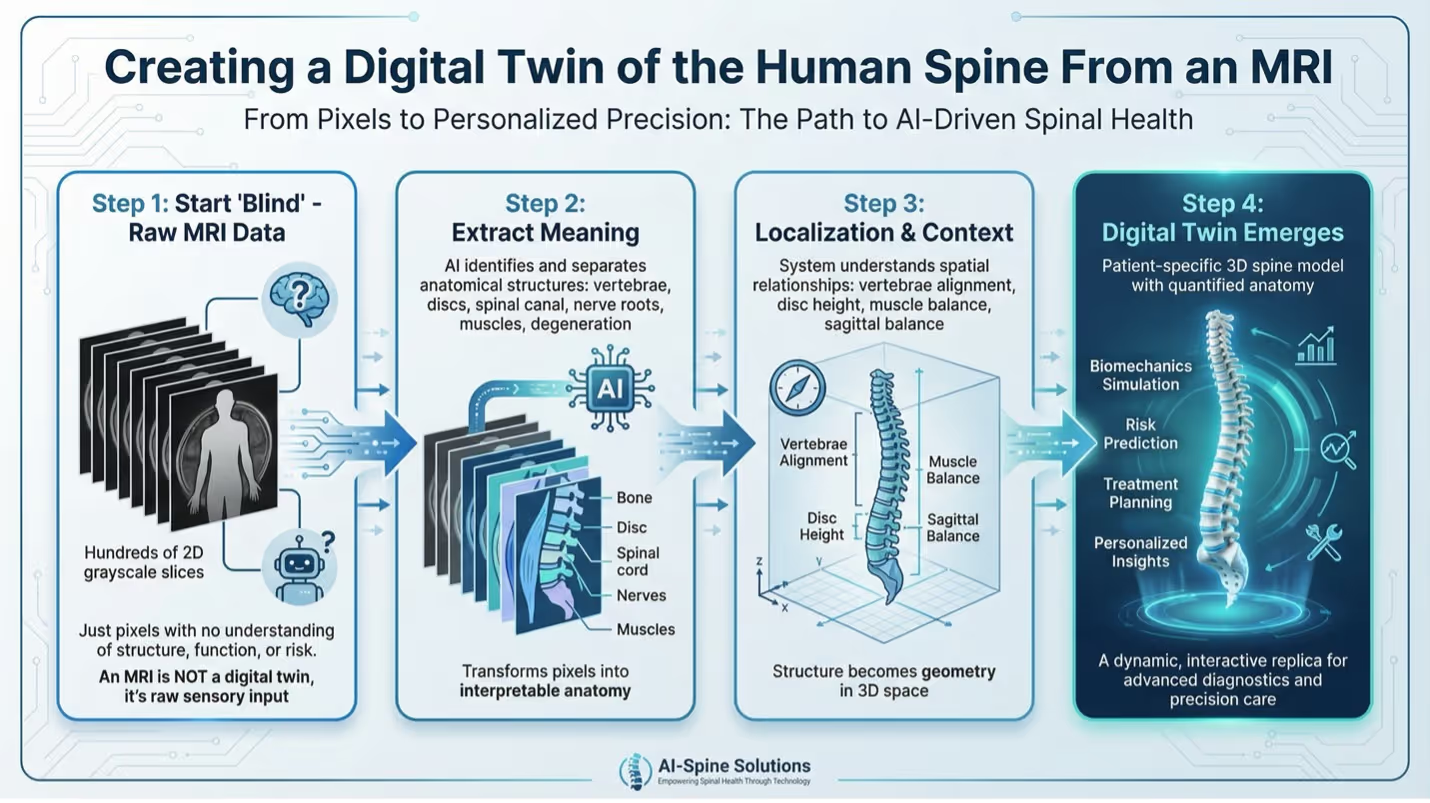
Step 1: Start "Blind"—The Raw MRI
When you geta spine MRI, hundreds of two-dimensional grayscale slices emerge. Just pixels at this stage—no understanding of structure, function, or risk. Just raw data.
Critical point: an MRI scan is not a digital twin. It's raw sensory input, like your vacuum's sensors detecting obstacles.
Step 2: Extract Meaning—Sense the World
AI andimage-processing systems analyze those MRI slices to identify specific structures: vertebrae, discs, spinal canal, nerve roots, muscles, areas of degeneration. We're turning pixels into interpretable anatomy we can measure and understand.
Step 3: Localization and Context—Understanding Relationships
The system understands how everything relates. How do the vertebrae align? What's the disc height difference? Is there muscle imbalance? How does the spine maintain balance against gravity?
Just like your vacuum learning room connections, the spine twin learns that "this disc herniation matters specifically because of where it sits in the biomechanical chain."
Step 4: The Digital Twin Emerges—A Personalized Spine Model
Now we have apatient-specific 3D model with quantified anatomy—not just vague text in a radiology report. We measure muscle quality, asymmetry patterns, degenerative changes, and load-bearing geometry with precision.
This digital twin is persistent, personal, computable, and comparable over time. Two patients with identical MRI reports now have very different digital twins based on their unique biomechanics.
Step 5: Make It Predictive—Simulate Surgeries
This is where digital twins transform healthcare. We can ask "what if" questions and simulate different surgical approaches before making a single incision:
- What if we only decompress the nerve?
- What if we fuse these vertebrae?
- How will muscle imbalance affect repair durability?
- What's the likelihood of adjacent segment degeneration?
Consider three different surgical scenarios for the same patient:
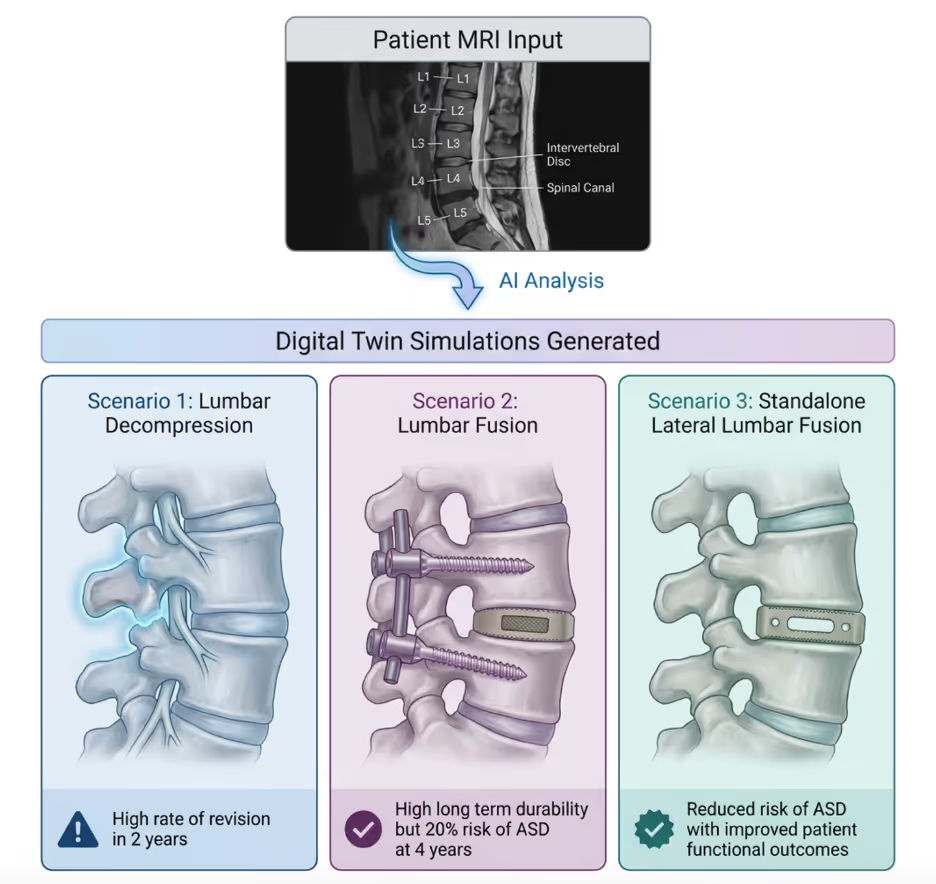
Look at three different surgical scenarios for the same patient. Scenario 1 showslumbar decompression—less invasive, but high revision rate predicted within twoyears. Scenario 2 shows lumbar fusion—high durability, but 20% risk of adjacent segment disease. Scenario 3 shows standalone lateral fusion—reduced adjacent segment risk with improved outcomes.
Without a digital twin, choosing between these approaches relies on surgeon experienceand population studies. With a digital twin, we model this patient'sspecific biomechanics and predict which approach will succeed for them.
Step 6: The Twin Evolves—Collective Intelligence
Individual digital twins are powerful. But when you build thousands or millions, collective intelligence emerges.
Imagine a database with digital twins of 100,000 spine patients, each with unique anatomy, surgical interventions, and long-term outcomes tracked over years.This becomes an unprecedented prediction engine.
When a new patient arrives, their digital twin is compared against this massive dataset. The system finds patients with similar anatomy and biomechanics and shows whathappened after different surgical approaches. This is the gold standard inevidence-based medicine: truly personalized predictions.
Choosing the Right Surgery for the Right Patient
For surgeons, digital twins provide confidence and precision. They can simulate multiple approaches, identify potential complications early, and explain recommendations with personalized data.
For patients, digital twins offer informed choice and realistic expectations. They answer the questions patients actually want answered: "Will this work for me? How long will improvement last? What's my specific risk of needing another surgery?"
The goal isn't replacing surgical expertise—it's augmenting it. Matching the right surgical approach to the right patient at the right time means better outcomes, fewer revision surgeries, less chronic pain, and improved long-term quality oflife.
From Your Living Room to the Operating Room
The journey from robot vacuum to spine surgery might seem unlikely, but the pattern is identical: sense the world, build a model, locate yourself within it, predict what happens next, and evolve based on new information.
Digital twins are already all around you—in your vacuum, in your smartphone learning battery patterns, in your car adapting to your driving style. Now that same technology is coming to healthcare with the potential to transform how we diagnose disease, plan treatments, and predict outcomes.
The next time your robot vacuum efficiently navigates around your furniture, remember: that same intelligence is helping surgeons navigate the complexity of the human spine.